AI Team Lead

The AI lab applies artificial intelligence to tackle key polar challenges.
Our team analyses data from sources including sea ice, wildlife, and climate models. AI then helps us find patterns and insights in these complex datasets which would be otherwise impossible to detect.
We use AI to make polar research more efficient and sustainable.
Our tools help reduce carbon emissions by optimising travel routes for research ships and autonomous vehicles, and by improving how we collect data in remote locations.
We use AI to track and understand changes in ice, oceans, and atmospheric conditions in real time.
We create virtual simulations of natural systems. These digital copies let us test different scenarios and predict future changes safely.
AI optimises expedition schedules and decides where to place scientific instruments. This saves time, money, and reduces environmental impact.
We integrate data into models that provide more accurate climate predictions more quickly.
We build tools that transform large, complex datasets into formats that people can actually use.
We develop practical AI solutions for satellite observations, sensor networks, and polar logistics. Our PhD and student projects train the next generation of environmental AI scientists.
We partner with research organisations worldwide to develop AI methods for polar science.
Our AI tools provide actionable information to policymakers, satellite operators, and conservation organisations.
We share our research through media and public talks.
IceNet is a deep learning system that forecasts Arctic sea ice. The system is trained on climate simulations and observational data. It outperforms state-of-the-art dynamical models, especially for extreme sea ice events.
AI Team Lead

Machine Learning Research Scientist

AI Researcher in Optimisation and Planning

Machine Learning Research Scientist

PhD Student

Machine Learning Research Scientist
Artificial Intelligence (AI) Lab, BAS Science Strategy Executive Group

Machine Learning Research Scientist
Artificial Intelligence (AI) Lab, Palaeo Environments, Ice Sheets and Climate Change team
AMOP is developing Artificial Intelligence methods that aim to optimise the efficiency of Antarctic field operations, while maximising science delivery
IceNet is a deep learning system that forecasts Arctic sea ice. The system is trained on climate simulations and observational data. It outperforms state-of-the-art dynamical models, especially for extreme sea ice events.
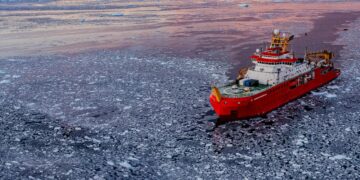
The AI for smart conservation project combines sea ice forecasts, satellite data, and GPS tracking to create early-warning systems for Arctic wildlife.
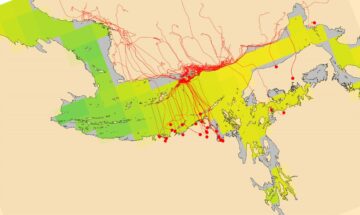
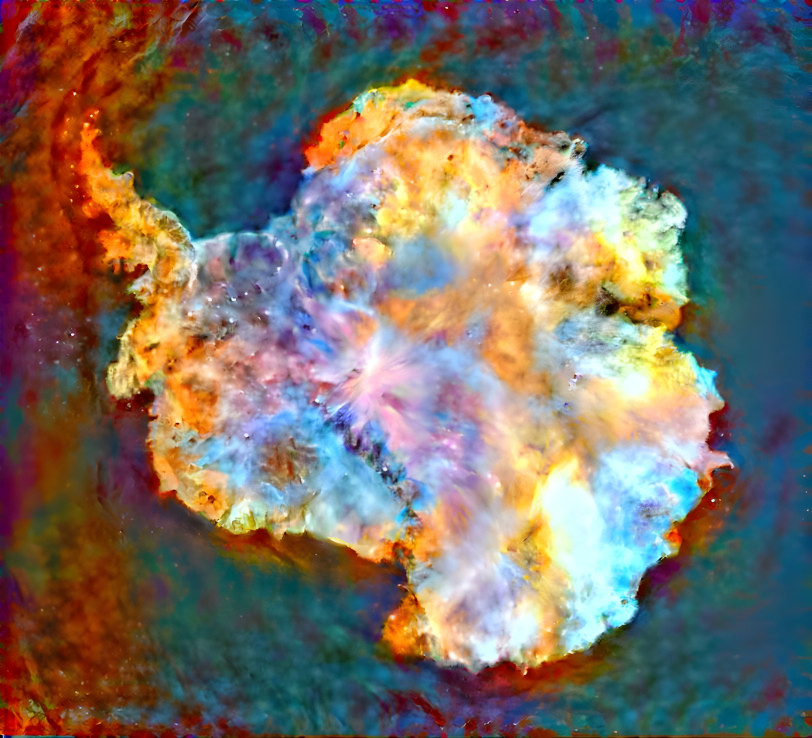
The AI for Earth Observation project develops machine learning tools to detect icebergs, sea ice, and wildlife from satellite imagery.
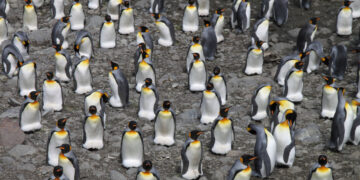
This project is developing digital twins of Antarctic and Arctic environments and resources. A digital twin makes it possible to test “what if” questions far more quickly than traditional computer models.
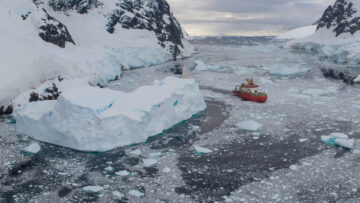
Researchers are using a new AI tool to detect icebergs in the Southern Ocean – the first step towards tracking the complete lifecycle of Antarctic icebergs from satellite data.
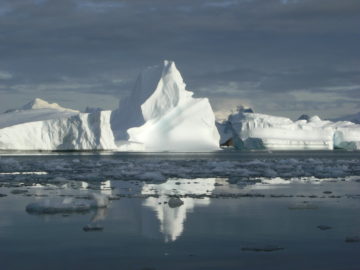
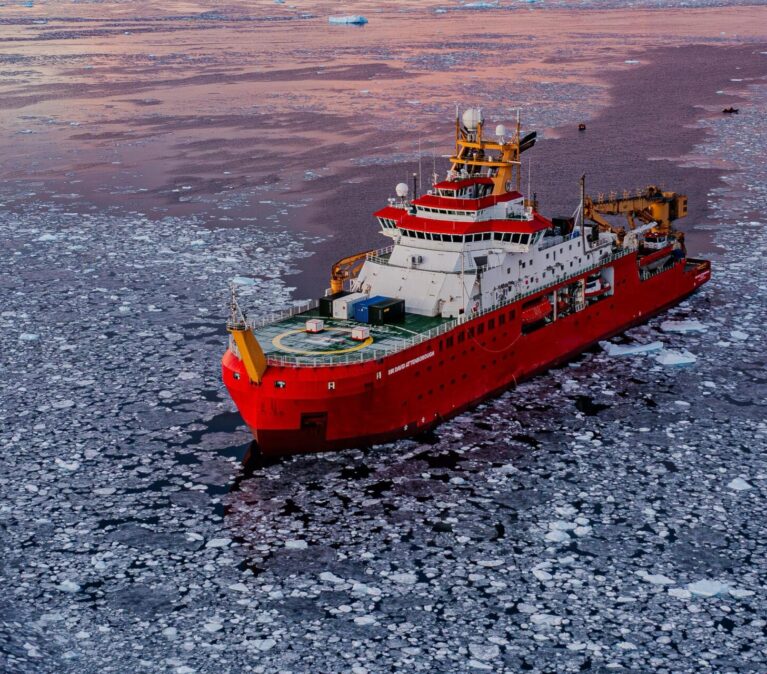
Artificial Intelligence (AI) will enable ships navigating in polar ocean conditions to be more efficient using a new route planning tool created by British Antarctic Survey (BAS) researchers. The tool […]
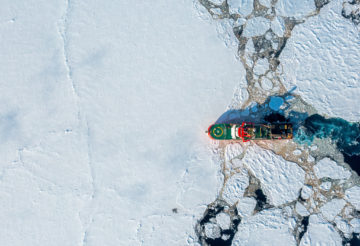
An international team of scientists led by British Antarctic Survey have published research today on using new technology to study mass stranding of whales from space and how the technology […]
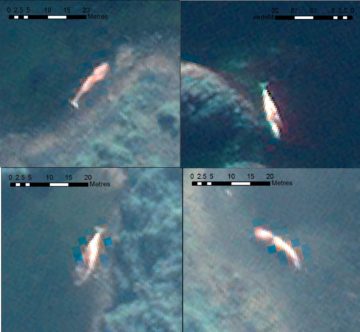
A new AI (artificial intelligence) tool is set to enable scientists to more accurately forecast Arctic sea ice conditions months into the future. The improved predictions could underpin new early-warning […]
British Antarctic Survey (BAS) scientists will work with an Artificial Intelligence company after being awarded a contract from the Canadian Space Agency (CSA) to support the protection of an endangered […]
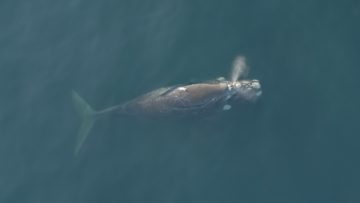
A new centre will enable 50 fully-funded PhD researchers to harness satellite data to tackle global environmental challenges. The Centre for Satellite Data in Environmental Science (SENSE) will bring together expertise in […]

A new Centre for Doctoral Training, involving researchers from British Antarctic Survey, will develop Artificial Intelligence (AI) techniques to address critical environmental challenges. Climate change and environmental hazards pose some […]
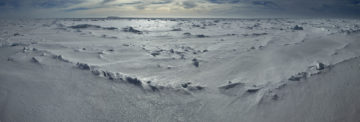
Scientists have used detailed high-resolution satellite images provided by Maxar Technologies’ DigitalGlobe, to detect, count and describe four different species of whales. Reported this week in the journal Marine Mammal […]
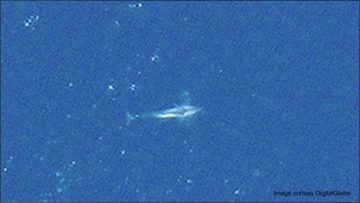
Reaching net zero, as a country or a business, requires new measures, technology and innovations. Digital twins are an example of this; they can be a powerful tool to drive innovation and efficiency.
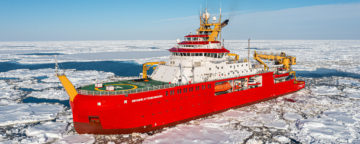
Tom Andersson, a data scientist at British Antarctic Survey Artificial Intelligence (AI) Lab, shares the latest predictions from a new Arctic sea ice forecasting AI tool as this year’s Arctic […]
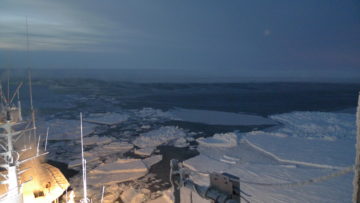
Over the last decade, digital technologies, including Artificial Intelligence, developed rapidly as did our capability to monitor our home planet from space with Earth Observation satellites. How can we most […]

When we see news reports on climate change on our TV, they are often accompanied by footage of a polar bear walking over the icy Arctic landscape. But the Arctic […]
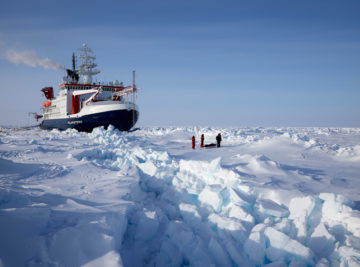
Today we officially launched the BAS AI Lab – thank you everyone for coming!
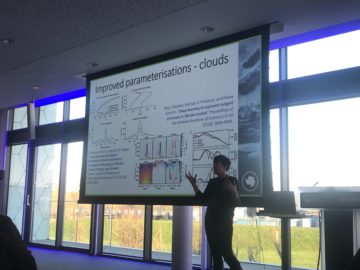
Andrew Fleming and Anita Faul present their research at the First Artificial Intelligence for Copernicus Workshop

Rachel Furner is a PhD student at British Antarctic Survey, which has recently opened up its new AI Lab, that aims to foster the application of various machine learning (and […]

Prem hosted at Data Study Group at the Alan Turing Institute Seals from space: automated Antarctic ecosystem monitoring via high-resolution satellite imagery Antarctic seal populations are potential indicators for the […]
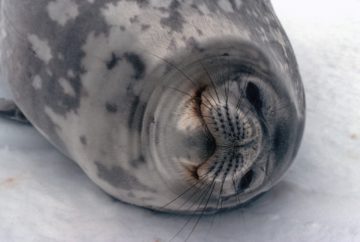
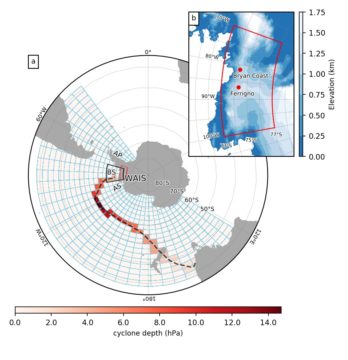
Accumulation in coastal West Antarctic ice core records and the role of cyclone activity Cyclones are an important component of Antarctic climate variability, yet quantifying their impact on the polar […]